
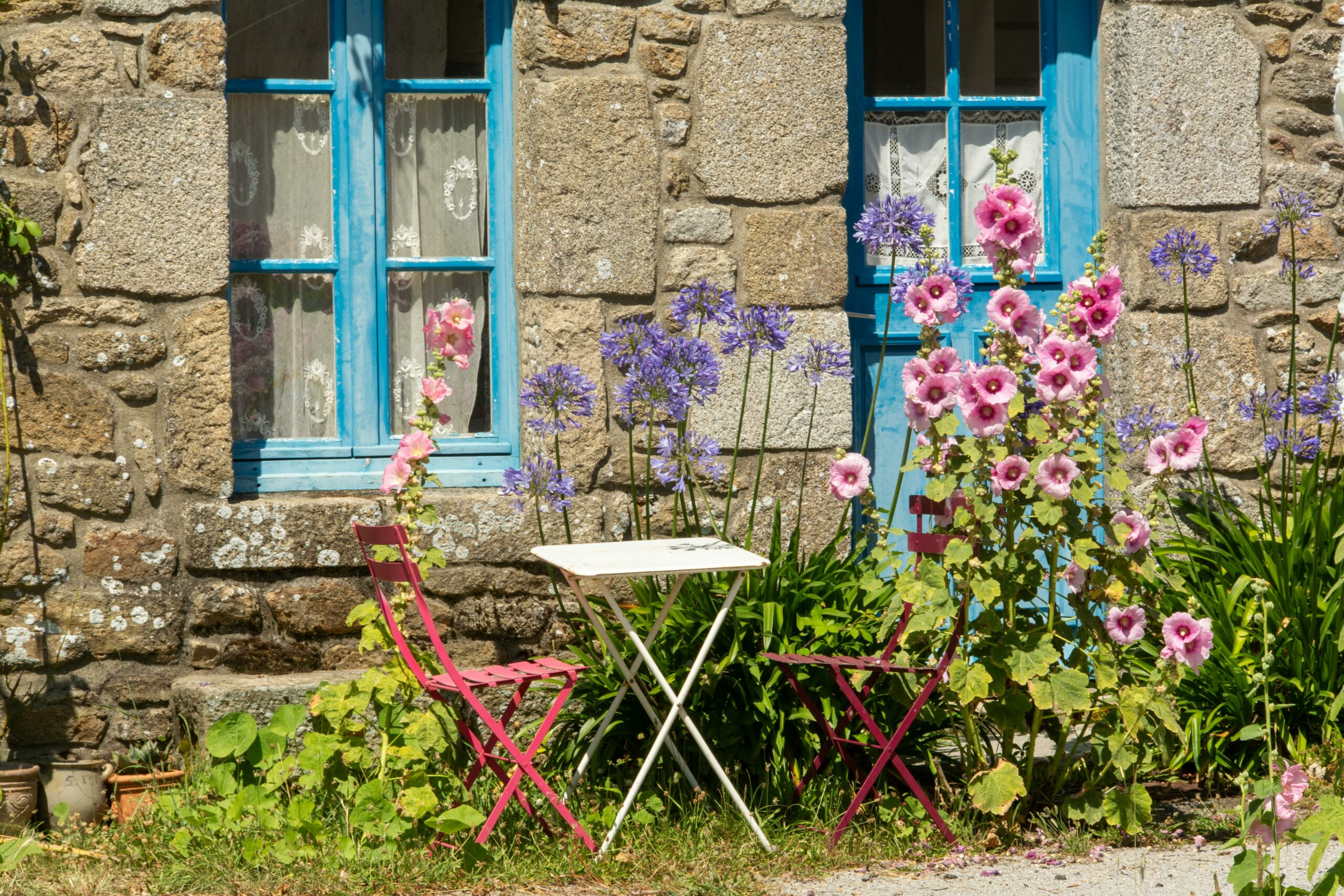
A small garden isn’t a limitation. It’s actually an opportunity – and I genuinely mean that, not as a consolation prize. Smaller spaces are easier to transform completely, easier to maintain, and easier to make feel intentional. The problem is that most people either ignore them or overcrowd them with stuff that doesn’t work together.
Style First, Budget Second
The good news is you don’t need a big budget or a landscape designer to make a real difference. Whether you’re starting from scratch or just trying to improve what you’ve already got, the principles are the same. And if you’re looking for guidance on the plant and maintenance side of things, https://entretienjardin65.fr/ covers that in practical detail – useful if you want to combine good design with plants that actually survive.
Start With a Clear Sense of How You Want to Use the Space
Before buying anything, ask yourself one question : what do I actually want to do out here ?
Sit and read ? Eat outside in summer ? Let kids play ? Grow herbs or vegetables ? The answer shapes everything – furniture choices, layout, plants, lighting. A garden designed for quiet relaxation looks completely different to one designed for entertaining six people.
Most small garden mistakes come from skipping this step and just buying things that looked nice in a shop. You end up with a bistro table that nobody sits at, three different types of pots that don’t go together, and a space that feels random rather than designed.
Decide on the primary use first. Then build around that.
Define Zones Even in a Tiny Space
One of the things that makes a small garden feel considered rather than cramped is zoning – giving different areas a clear purpose, even if those areas are only a few square metres each.
A simple outdoor rug under a small table and chairs immediately creates a “dining area.” A bench against a wall with some cushions and a side table becomes a seating zone. A raised bed or a row of tall pots along one edge defines a planting area. You don’t need much space for any of this.
Zoning also helps the eye understand the layout of the garden rather than seeing it as one undifferentiated patch. That makes the space feel larger, not smaller.
Choose Furniture That Fits – Actually Fits
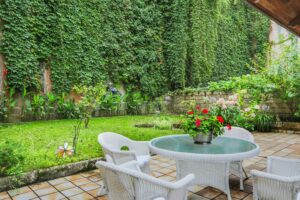
This sounds obvious, but it’s where so many people go wrong. Outdoor furniture is often sold at a scale designed for large terraces or gardens. A four-seater dining set that looks proportionate in a showroom can take up 70% of a small patio and leave no room to move around it comfortably.
Measure your space before you buy anything. Know the exact dimensions you’re working with.
For small gardens, folding or stackable furniture is genuinely brilliant. You can bring it out when you need it and store it when you don’t, which opens the space up considerably for day-to-day use. Bistro sets – a small round table and two chairs – are a reliable choice. They’re compact, widely available, and come in styles from traditional metal to modern rattan.
Benches are also underused in small gardens. A bench built against a wall or fence takes up very little depth while providing solid seating, and the space beneath it can be used for storage.
Use Vertical Space – It’s Free
When floor space is limited, go up. Walls and fences are prime real estate in a small garden, and most people leave them completely bare.
Wall-mounted planters, climbing plants on a trellis, hanging baskets, a vertical herb garden – all of these add greenery, texture, and visual interest without using any ground space at all. Climbers like clematis, jasmine, or climbing roses can transform a bare fence into something genuinely beautiful within a season or two.
Shelving units designed for outdoor use can hold pots at different heights, which creates depth and layers that make a small space feel more dynamic. IKEA and a number of garden centres sell affordable outdoor shelving – worth looking at before spending more than you need to.
Plants : Less Is More, Done Right
The instinct when faced with a small garden is often to fill every corner with plants. The result is usually a space that looks messy rather than lush.
A better approach is to choose fewer plants and give them room to breathe. A single large pot with a statement plant – an olive tree, a bamboo, a large ornamental grass – has more visual impact than ten small pots crammed together.
Think about structure first : plants that provide year-round shape (box balls, bay trees, grasses). Then layer in seasonal colour – bulbs in spring, annuals in summer, ornamental kale in autumn. That way the garden never looks completely bare, but it also never looks chaotic.
If you want edible plants, herbs are perfect for small spaces. Rosemary, thyme, mint, and basil can all live in pots on a patio and genuinely get used rather than just looking decorative.
Lighting : The Upgrade That Costs Almost Nothing
Solar-powered outdoor string lights have improved massively in the last few years. They’re inexpensive, easy to install (no wiring), and they completely change the atmosphere of a small garden in the evening. A set of warm-white string lights strung across a fence or overhead between two posts costs between £15 and £40 and lasts for years.
Lanterns with candles or battery-operated LED candles on a table add warmth without any installation at all. Small solar spike lights along a path or border add subtle definition.
Lighting is probably the highest return-on-investment upgrade you can make in a small garden. It extends the usable hours of the space into the evening and creates an atmosphere that no amount of expensive furniture can match on its own.
Keep It Cohesive
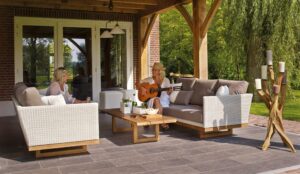
The difference between a small garden that looks intentional and one that looks thrown together is usually cohesion – the sense that someone made decisions rather than just accumulated things.
Pick two or three colours and stick to them across pots, furniture, and accessories. Choose a style – modern, rustic, Mediterranean, minimal – and filter your purchases through it. If something doesn’t fit the palette or the style, leave it.
This doesn’t mean everything has to match perfectly. It means everything should feel like it belongs in the same space. That’s a much lower bar, and it makes a dramatic difference to how the final result looks.
Small gardens reward intention more than investment. Spend some time thinking, plan before you buy, and be selective. That’s really the whole secret.